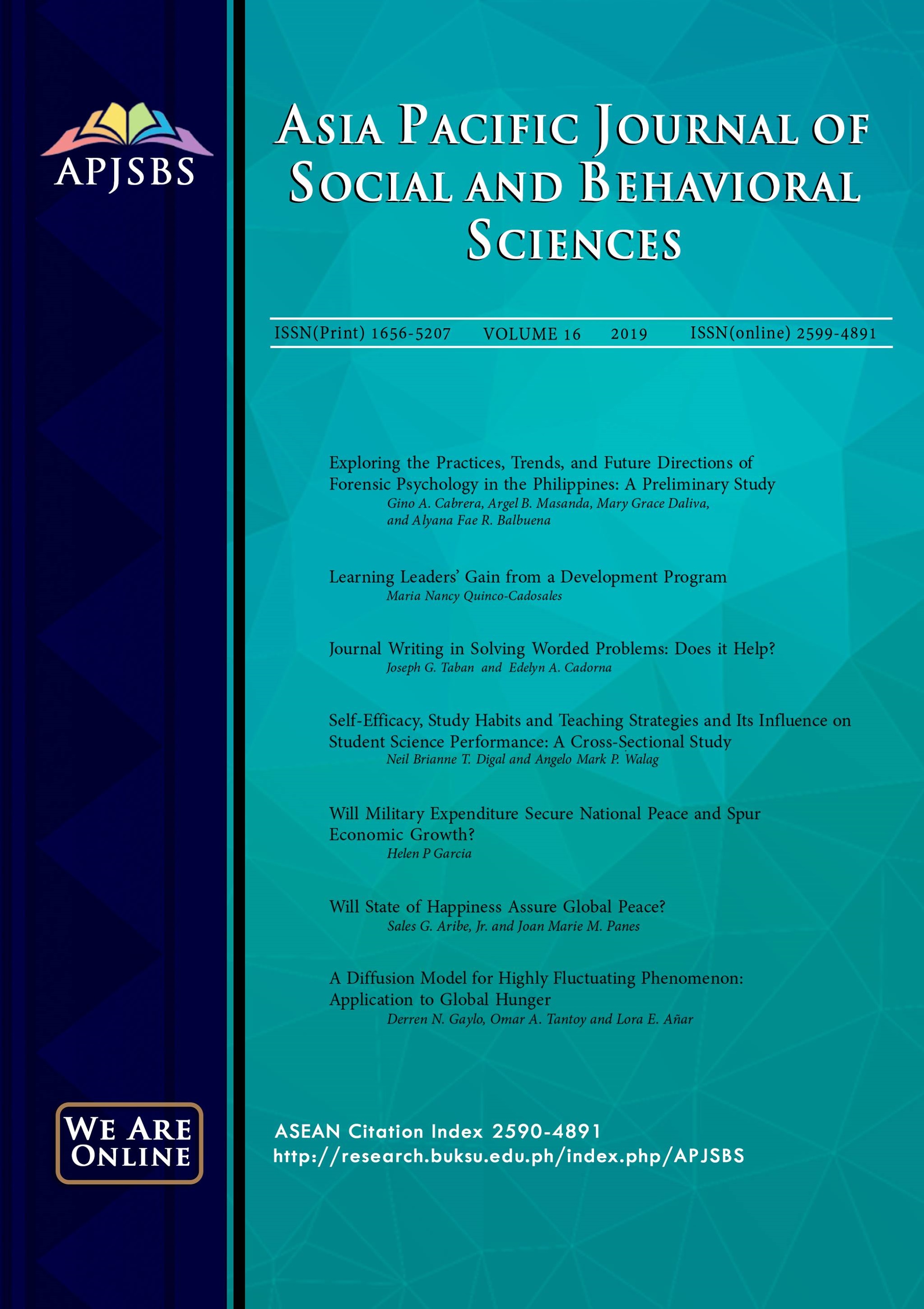
Self-efficacy, Study Habits and Teaching Strategies and its Influence on Student Science Performance: A Cross-Sectional Study
DOI:
https://doi.org/10.57200/apjsbs.v16i0.162Keywords:
Cross-sectional, science education, science performance, self-efficacy, study habitsAbstract
The focus of this study was to determine the influence of selfefficacy, study habits, and teaching strategies to student performance in Science of the junior high school students. The study utilized the descriptive research design examining the relationship of self-efficacy, study habits, and teaching strategies to science performance across grade levels. The results revealed that the overall science performance of the 323 sample respondents from Grades 7 to 10 is satisfactory. Varied teaching strategies in teaching science were experienced about half of the lessons by the students. There was significant differences in student’s performance in science and teaching strategies experienced among grade levels while no significant difference was found in the students’ study habits and self-efficacy. The overall rating on the study habits of the students was moderately good, and among the three variables, only self-efficacy could significantly influence the academic performance in science of the Junior High School students. It is recommended that an in-depth study to qualitatively determine the relationship of variables studied in this research be done.
Downloads
Published
Issue
Section
License
Copyright (c) 2019 Asia Pacific Journal of Social and Behavioral Sciences

This work is licensed under a Creative Commons Attribution-NonCommercial-ShareAlike 4.0 International License.