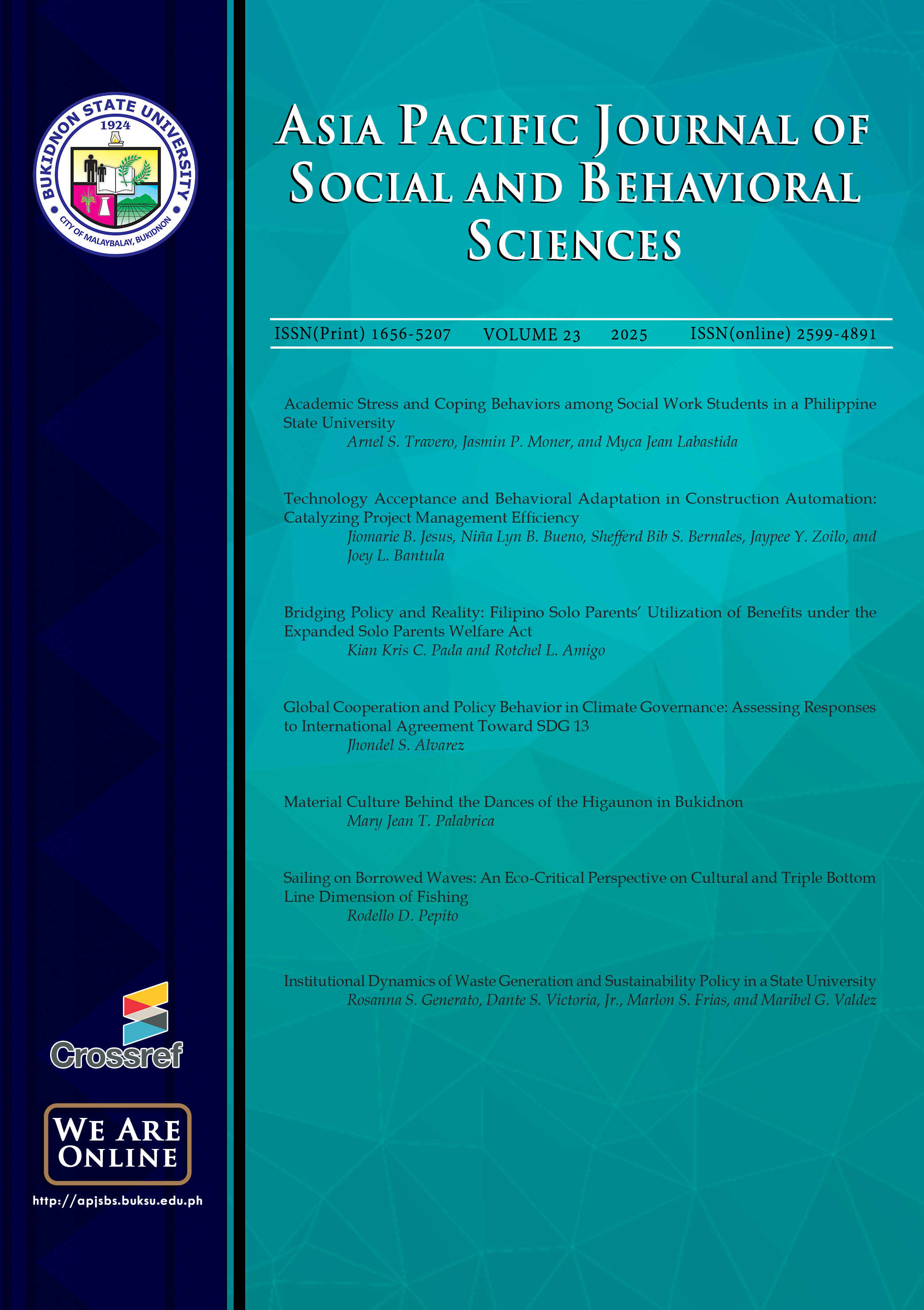
Academic Stress and Coping Behaviors among Social Work Students in a Philippine State University
DOI:
https://doi.org/10.57200/apjsbs.v23i0.455Keywords:
Academic stress, social work students, stressors, coping strategies, stress- reduction program, Philippine higher educationAbstract
Academic stress is a pervasive challenge that affects students' learning and well-being. This study examined the academic stress of Bachelor of Science in Social Work students at a state university in Claveria, Misamis Oriental, Philippines, focusing on its level, causes, differences across year levels, and coping strategies. Using an explanatory sequential mixed-method design, data were collected from 266 students through the Academic Stress Inventory and open-ended responses, and were analyzed using descriptive statistics, ANOVA, and thematic analysis. Results revealed that students experienced moderate academic stress, particularly related to teachers, test performance, time management, and self-inflicted pressures. Significant differences were found in test-related and self inflicted stress across year levels, with first- and third-year students reporting higher levels. The main stressors were examinations, parental expectations, poor time management, and instructor-related demands. To cope, students engaged in spiritual practices, quality time with family and peers, music, self-motivation, and time management strategies. Based on these findings, a 10-week stress-reduction program was developed to support students’ well-being and academic success. This study contributes to the growing literature on academic stress in Philippine higher education and provides a practical intervention model for social work students and similar academic programs.
Downloads
Published
Issue
Section
License
Copyright (c) 2025 Asia Pacific Journal of Social and Behavioral Sciences

This work is licensed under a Creative Commons Attribution-NonCommercial-ShareAlike 4.0 International License.